Authority vs Attention: The Difference Most Founders Miss
There’s a quiet mistake happening in a lot of businesses right now.
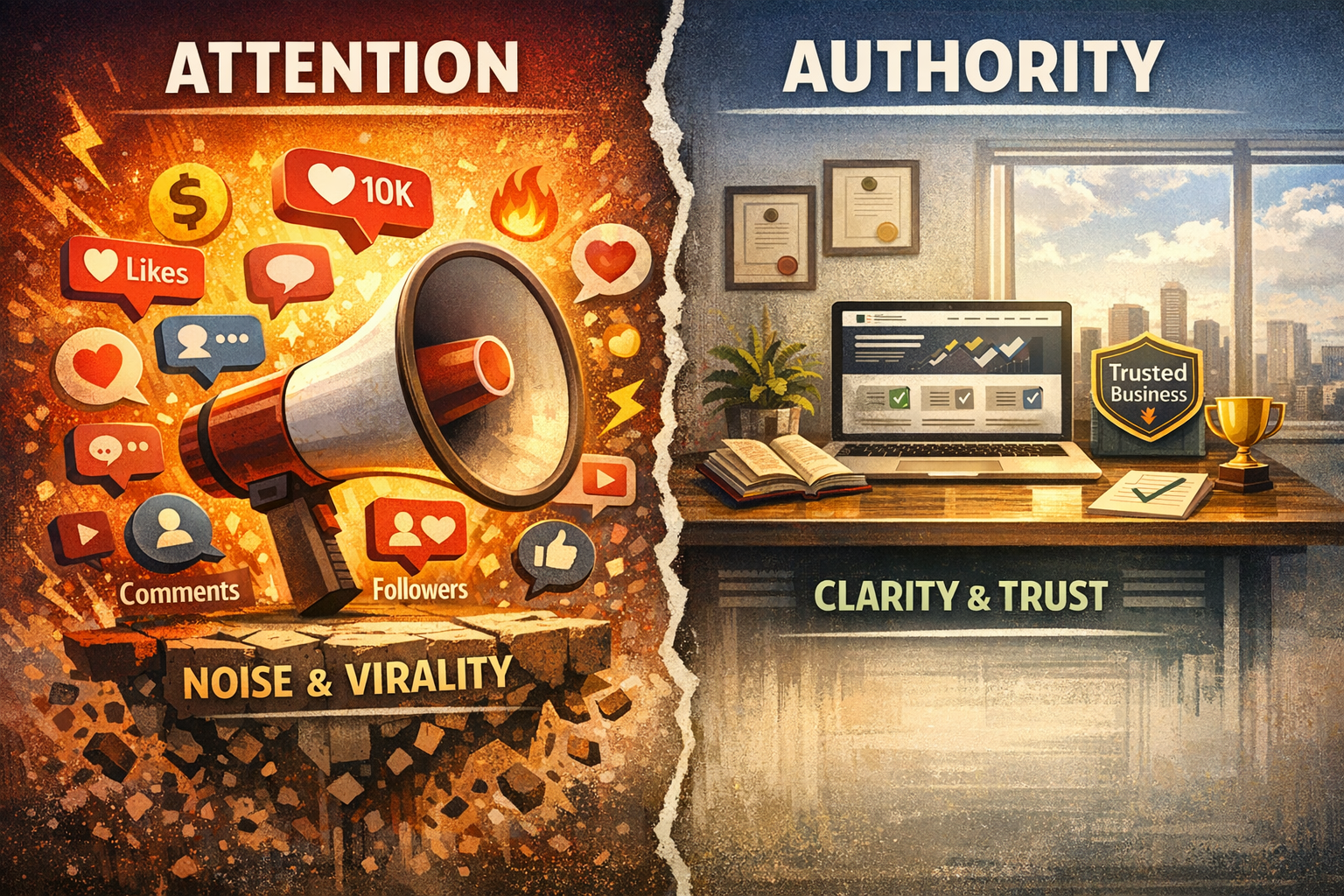
Founders think they have a visibility problem.
They think the issue is reach.
More content.
More posting.
More platforms.
More audience.
So they try to get more attention.
But the real problem usually isn’t attention.
It’s authority.
And those two things behave very differently online.
Attention Is Easy to Get
Attention is the currency of the internet.
And it’s surprisingly easy to generate.
A viral post.
A clever hook.
A controversial opinion.
A trending topic.
All of these can create attention.
And attention can feel like progress.
You get likes.
Comments.
Followers.
But attention doesn’t automatically translate into trust.
And it definitely doesn’t always translate into business growth.
Because attention is temporary.
Authority is something else entirely.
Authority Is What Makes People Stay
Authority isn’t about being loud.
It’s about being clear.
When someone encounters a business with authority online, a few things happen almost immediately.
They understand what the business does.
They understand who it’s for.
And they feel a sense of confidence that the person behind it knows what they’re talking about.
Authority creates a feeling of stability.
It makes people comfortable taking the next step.
Booking a call.
Buying a product.
Recommending the business to someone else.
Authority isn’t about grabbing attention.
It’s about earning trust.
The Problem With Attention-First Growth
A lot of modern marketing advice unintentionally trains founders to build their business backwards.
The advice usually sounds something like this:
Post more content.
Go viral.
Build an audience.
Then figure out the rest later.
But when growth starts with attention, things get fragile.
Traffic comes in.
But the website doesn’t explain the business clearly.
People are interested — but they don’t fully understand the offer.
The brand feels active online, but the foundation underneath it isn’t solid yet.
This creates a strange experience for founders.
They’re visible.
But conversions stay inconsistent.
The business feels busy… but not stable.
What Authority Actually Looks Like
Authority online is built through structure.
Not just content.
Not just personality.
Structure.
A business with strong authority typically has four things in place:
Clear positioning
People understand what the business does and who it serves.
Strong messaging hierarchy
The main idea is obvious. Supporting ideas reinforce it.
A website that guides decisions
Visitors aren’t wandering through pages trying to figure things out.
Proof that reinforces trust
Content, results, and examples that support the expertise.
When those things exist, something interesting happens.
Attention starts working better.
Visibility multiplies authority.
Instead of multiplying confusion.
The Authority Blueprint Approach
This is the philosophy behind the way I help founders build their digital presence.
Not louder marketing.
Better foundations.
The sequence matters.
Clarity → Structure → Authority → Visibility.
When that order is respected, growth becomes much more stable.
Content starts attracting the right people.
The website converts visitors more consistently.
And the business stops feeling like it’s constantly chasing momentum.
Instead, it starts building real authority online.
A Quick Way to See Which One You’ve Been Building
If your business has been focused heavily on content or marketing lately, it can be helpful to step back and ask a simple question.
Is the foundation underneath that visibility strong?
When someone lands on your website:
Do they understand the business immediately?
Do they understand the value of the work?
Do they know what to do next?
If not, the issue probably isn’t attention.
It’s structure.
And that’s actually good news.
Because structure is fixable.
Evaluate Your Website Structure
If you’re curious where your website might be losing clarity, I put together a simple evaluation founders can run.
It walks through the key structural elements that determine whether a website communicates authority.